

The College of Medicine, University of Ibadan (CoMUI), on Friday, 16 October 2026, held a stimulating Artificial Intelligence (AI) training workshop for its academic staff at the Paul Hendrickse Lecture Theatre, marking a significant step towards equipping educators with modern technological tools to enhance teaching, research, and administrative efficiency.
The event drew an impressive array in the top echelon of the College including the Provost, CoMUI, Professor T. O. Ogundiran; Deputy Provost, Professor S. B. Olaleye; the Registrar and Secretary to the College, Mr. A. E. Odedele; the Financial Controller, Mr. S. O. Ayansina; the Medical Librarian, Dr. Grace A. Ajuwon; deans of various faculties; heads of departments and other academic staff of CoMUI. The resource persons included Dr. Egbe Osifo-Dawodu, Founding Partner of Anadach Group, Nigeria and USA; Dr. Olusola Ayoola, Founder/CEO of Robotics and Artificial Intelligence in Nigeria (RAIN) who sent two of her partners from Lagos to help in facilitating the practical session, Dr. B. I. Ayinla, software engineer and cyber security expert from the Department of Computer Science, University of Ibadan; and Professor A. A. Adebiyi, consultant physician and cardiologist from the Department of Medicine, UI. The workshop was designed to sensitise academic staff at all levels of AI knowledge on the effective and responsible use of AI tools in academic work.
In his opening address, the Provost, CoMUI, Professor T. O. Ogundiran, explained the rationale behind the workshop, pointing out that the College recognised the varying levels of AI literacy among staff. "We are aware that we are all at different levels of knowledge and exposure to AI and the usage of AI. As a College, we thought it necessary to bring all of us together so that we can begin to learn from the basics," he said. He emphasised that the training was the first in a series of workshops aimed at building a foundation for AI integration across the College.

The workshop featured four distinguished resource persons who delivered modules covering diverse aspects of AI application in academia and healthcare. Dr. Egbe Osifo-Dawodu of Anadach Group delivered the first module which provided a global perspective on AI's disruptive potential. She highlighted AI's capacity to revolutionise healthcare delivery, stating, " It's not so much that AI competes, but that it enables us to think and learn and deliver better healthcare." Dr. Osifo-Dawodu, who holds an M.D. from Cranfield College of Management, an M.Sc. from Oxford University, and an MBBS from the University of Ibadan, shared practical examples of AI applications in radiology and anaesthesia, demonstrating how the technology can predict patient complications and improve diagnostic accuracy.
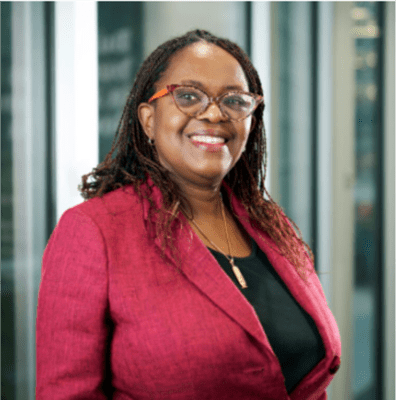
Dr. B. I. Ayinla, the software engineer and cyber security expert delivered two comprehensive modules focused on practical AI applications for teaching and research. He introduced participants to the fundamentals of prompt engineering, explaining the four critical components of effective AI interaction: context, task, constraints, and output. "Once you have these four components, then, depending on the type of query, at least the system will give you what you want," he explained during his interactive session. Dr. Ayinla also demonstrated how AI can assist with data cleaning, literature review, methodology design, and statistical analysis, while cautioning participants about the importance of verification. "Do not let AI do the thinking for you. You take responsibility for whatever AI is giving you," he warned.

Professor A. A. Adebiyi, the consultant physician and cardiologist who was also the former chairman of the College IT Committee and member of the UI Information Technology and Media Services (ITeMS) Board, shared practical experiences from his administrative roles. He demonstrated how AI had transformed operations in the Department of Medicine, particularly in processing examination results and managing student rotations. "For the last two end-of-posting tests, when they finish the exams on Friday, the results are out by 4 p.m. on that day," he revealed, showcasing the efficiency gains achieved through AI adoption. Professor Adebiyi also stressed the need for institutional digitalisation, noting that "Without data, it's difficult to plan. We need to be able to leverage on the vast amount of data that we generate to make predictions or analyses."

Dr. Olusola Ayoola of Robotics and Artificial Intelligence in Nigeria (RAIN), delivered the last module on the limitations and ethical considerations of AI. He cautioned participants about AI's potential for hallucination, bias, and contextual limitations. "AI is an amplifier. If anyone is lazy, AI will help the person to become lazier. If someone is hardworking and excellent, AI will amplify that as well," he stated. Dr. Ayoola, a first-class graduate of Electrical Engineering from the University of Ibadan who obtained his doctorate in Robotics from the University of Manchester, emphasised the importance of human oversight in AI applications, particularly in medical practice. He introduced concepts such as temperature settings, context windows, and transfer learning, explaining how these affect AI outputs and the need for local data training to address contextual biases.

The workshop also featured live practical sessions where participants learned to use ChatGPT, with Dr. Ayoola guiding attendees through creating effective prompts. Participants engaged in hands-on exercises, including generating lesson plans and examination questions using AI. A robust question-and-answer session followed each module, with participants raising concerns about data privacy, verification of AI-generated content, academic integrity, and the implications of AI for the future of medical education.

Addressing questions on institutional AI policy, Professor Adebiyi disclosed that the Vice-Chancellor of the University of Ibadan has established a committee to develop guidelines for AI use at the University of Ibadan. "… I am a member of the committee as well. And as part of the preliminary work of the committee, we are asking for a survey on the use of AI," he announced, encouraging staff to participate. Dr. Ayinla added that over 2,000 people had already filled the survey across the university, with the committee working towards producing an inclusive policy covering both students and staff.

The training concluded with closing remarks from the provost who expressed gratitude to the facilitators and participants. "I believe that we have gained one or two things. Like I said earlier on, this is just the first series," Professor Ogundiran stated, thanking the approximately 93 participants who joined online in addition to those present physically. He specifically acknowledged Dr. Ayoola's contributions and the in-house facilitators for their commitment to the programme.

The event underscores CoMUI's commitment to positioning its academic staff at the forefront of technological innovation in medical education. The training's significance extends beyond immediate skill acquisition, signalling a broader institutional shift towards digital transformation and the responsible integration of AI in medical education, research, and healthcare delivery. As the College moves towards developing formal AI policies and hosting future workshops, participants are expected to leverage the knowledge gained to enhance their teaching methodologies, research capabilities, and administrative efficiency, ultimately benefiting students and patients who rely on the institution's services.